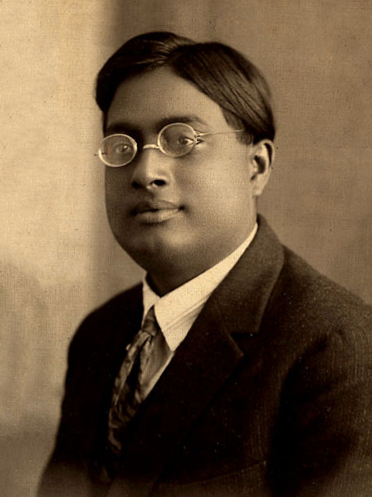
Born: April 11, 1908, Nikko, Japan | Died: December 19, 1997, Tokyo, Japan
Series: Pioneers of Connectivity | Category: Electronics | #PioneersOfConnectivity
A Radio Repair Shop in a Bombed-Out Department Store
In September 1945, Japan lay in ruins. The atomic bombs had fallen. The emperor had surrendered. In the wreckage of Tokyo’s Nihonbashi district, the Shirokiya Department Store stood gutted — its upper floors open to the sky, its ground floor littered with debris.
This is where Masaru Ibuka chose to open a radio repair shop.
He was 37 years old. He had spent the war years in the Imperial Navy’s Wartime Research Committee, designing heat-seeking missiles and detection amplifiers for submarine hunting. None of it mattered now. The war was over, and Ibuka — like millions of Japanese — had to start from nothing.
But Ibuka had something most people didn’t: a conviction that the same engineering talent that had built weapons could build something better. Something the world would actually want.
Within twelve months, that conviction would lead him to co-found a company that would change how every human on earth experiences music, television, and personal electronics. A company called Sony.
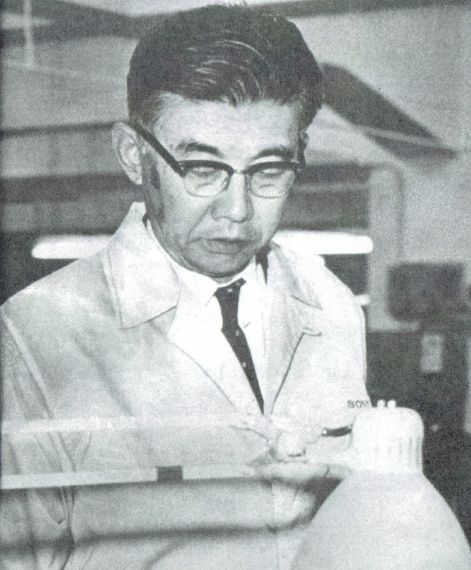
The Boy Who Talked to Radios
Masaru Ibuka was born on April 11, 1908, in the mountain town of Nikko, in Tochigi Prefecture — about 100 kilometres north of Tokyo. His father, Tasuku Ibuka, was an architectural technologist who had studied electrochemistry. His father built one of Japan’s earliest water-driven electrical power stations. Technology was in the family’s blood.
But tragedy struck early. Masaru lost his father at just two years old. Raised first by his grandfather, then by his mother after she remarried, he moved to Kobe as a child. He was quiet, introverted, and obsessed with machines. By his teens, he was operating a ham radio station — one of a handful of amateur radio operators in 1920s Japan.
At Waseda University in Tokyo, Ibuka studied electrical engineering. He was brilliant but unconventional — preferring the lab bench to the lecture hall. His classmates called him “the genius inventor.” His graduation thesis, on an experimental projection-type television system, won recognition at the Paris Exhibition of 1933. He was 25, and he was already thinking about how to put images on screens.
From Film Labs to War Labs
After graduating, Ibuka joined Photo-Chemical Laboratory (PCL), a company processing movie film. It was here that he first combined his two obsessions: electronics and the consumer experience. How do you make sound better on film? How do you project images more clearly? These weren’t academic questions for Ibuka — they were puzzles he couldn’t stop solving.
In 1936, he married Sekiko Maeda, whose family had connections to the Japanese monarchy. The marriage opened doors to Japan’s military-industrial establishment. As the war intensified, Ibuka was pulled into defence research — heat-seeking missiles, detection amplifiers, submarine-hunting technology.
It was in the navy’s research committee that he met a young lieutenant named Akio Morita. Morita came from a wealthy sake-brewing family, was educated, polished, and had an instinct for business that Ibuka completely lacked. The two men couldn’t have been more different in temperament. They became inseparable.
Years later, Ibuka’s son Makoto would describe their bond: “They were bound together by a tie so tight it was more like love than friendship.”
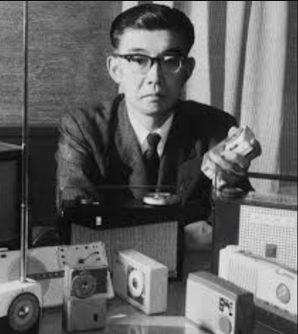
The Bet on the Transistor
In 1946, Morita saw a newspaper article about Ibuka’s radio repair shop in the bombed-out department store. He quit his university teaching position and moved to Tokyo. With funding from Morita’s father, they co-founded Tokyo Tsushin Kogyo K.K. — Tokyo Telecommunications Engineering Corporation.
Their first product was an electric rice cooker. It was a disaster. The rice came out either burnt or undercooked. Nobody bought it.
Ibuka then built Japan’s first tape recorder — the Type-G, released in 1950. It weighed 35 kilograms. It too sold poorly. Courts and schools eventually bought a few, but it was hardly a commercial breakthrough.
Then came the moment that would define everything.
In 1952, Ibuka visited the United States for the first time. At Bell Laboratories in New Jersey, he learned about a tiny device called the transistor — invented in 1947, but still considered a curiosity. Bell was licensing the technology for $25,000. Most licensees planned to use transistors for hearing aids and military equipment.
Ibuka saw something different. He saw a radio you could hold in your hand.
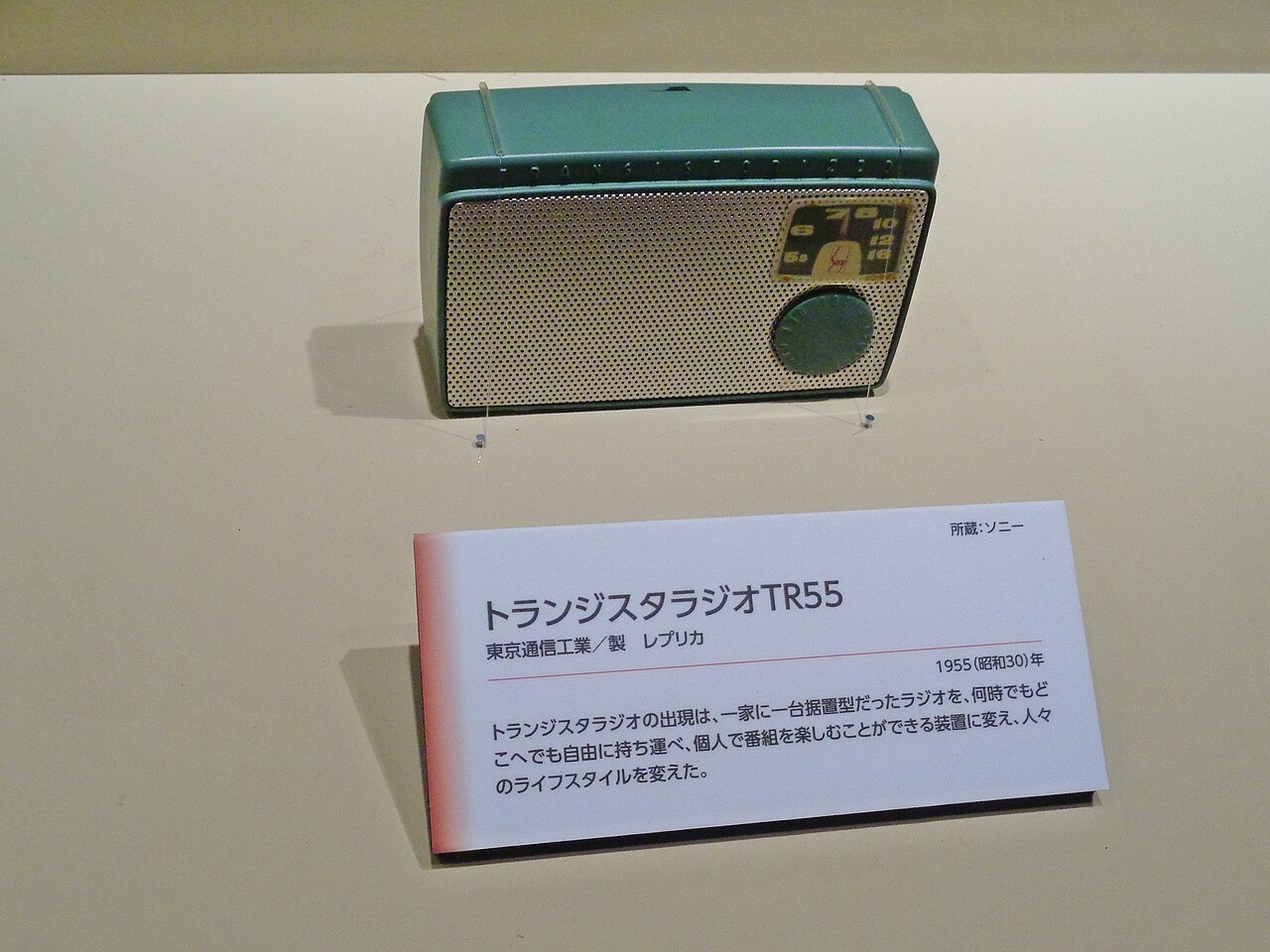
Morita flew to the US and closed the deal. Back in Tokyo, Ibuka’s engineering team — most of them in their twenties — spent two years figuring out how to manufacture transistors reliably. In 1955, they released the TR-55: Japan’s first transistor radio. It was small enough to fit in a shirt pocket (though Sony allegedly designed their salesmen’s shirts with slightly larger pockets to make sure it fit).
The transistor radio didn’t just make Sony. It changed what “Made in Japan” meant to the world. Before the TR-55, Japanese products were synonymous with cheap imitations. After it, Japan was a technology leader.
The Relentless Miniaturiser
Ibuka’s genius wasn’t in inventing fundamental technologies — it was in seeing what those technologies could become in people’s hands. While Western companies built transistors into military radar systems and telephone exchanges, Ibuka kept asking the same question: how do we make this smaller, cheaper, and personal?
The results came in rapid succession. In 1960, Sony released the world’s first transistor television — the TV8-301. In 1968, Ibuka’s team unveiled the Trinitron colour television, a breakthrough in picture quality that would dominate the market for three decades. In 1975, the Betamax home video system brought recording into living rooms (even though VHS eventually won the format war, Betamax pioneered the entire category).
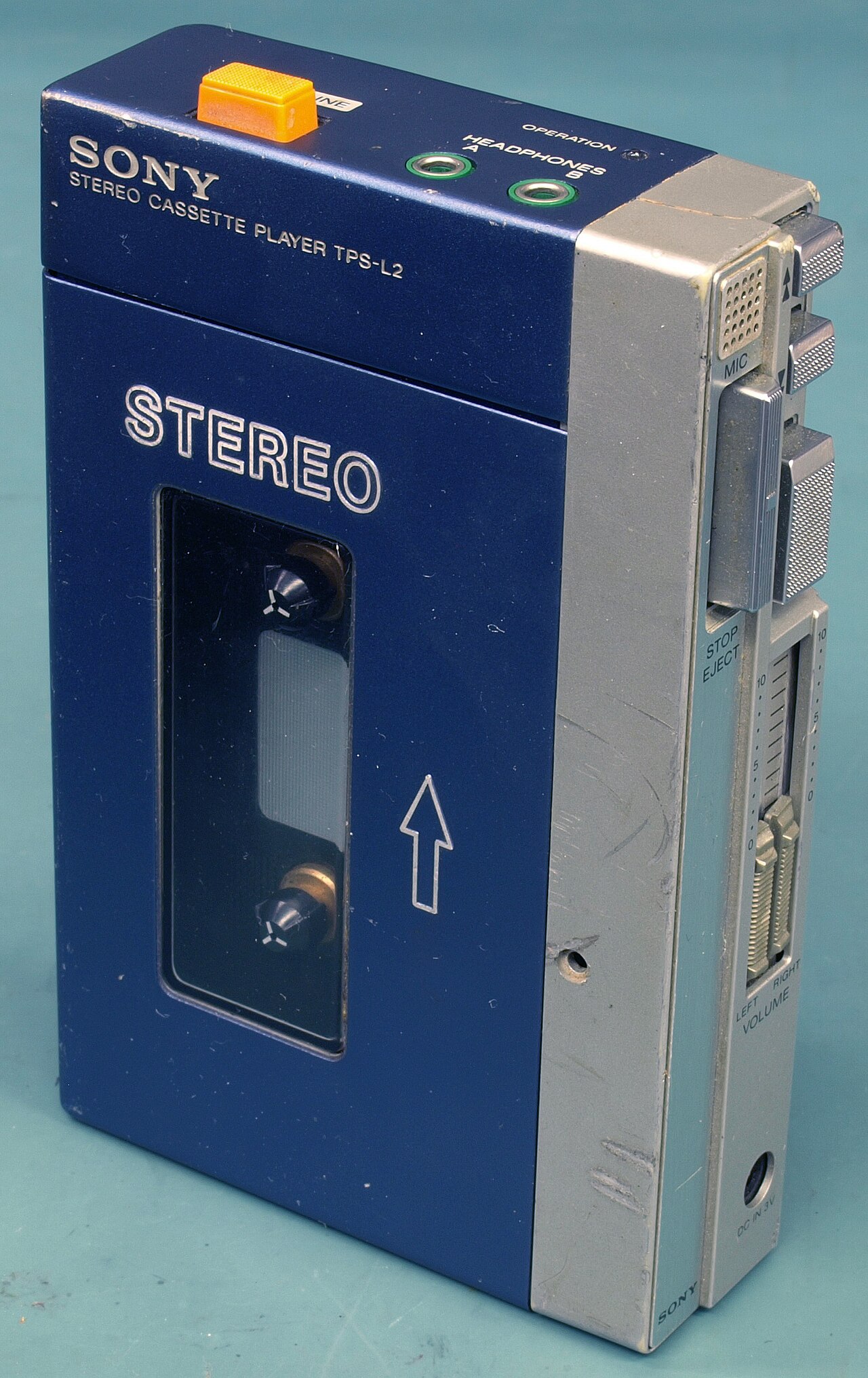
And then there was the Walkman.
The story is legendary: in 1979, Ibuka — now retired as chairman — complained to Sony’s engineers that he wanted to listen to music on long international flights without disturbing other passengers. The engineers modified a portable tape recorder called the Pressman, removing the recording circuit and adding a stereo amplifier and lightweight headphones.
Ibuka loved it so much that he showed it to Morita. Morita immediately ordered it into production. Sony’s marketing team was sceptical — who would buy a tape player that couldn’t record? — but Morita and Ibuka overruled them. The Walkman shipped on July 1, 1979. The first batch of 30,000 units sold out in weeks.
The Walkman didn’t just sell 400 million units over its lifetime. It invented the concept of personal, portable music — the direct ancestor of the iPod, the iPhone, and every pair of wireless earbuds you see on the street today.
The Other Legacy: Education
After retiring from Sony in 1976, Ibuka devoted himself to a cause that had consumed him for years: early childhood education. He had always believed that the most critical period of human learning was from birth to three years old — and that Japan’s education system was wasting this window entirely.
In 1971, he published Kindergarten Is Too Late, a book arguing that structured learning should begin in infancy. The book was controversial but influential, translated into multiple languages, and sparked global discussion about early childhood development. He wrote twelve books in total, most on education and child development.
He also founded the Sony Fund for the Promotion of Science Education, ran the Early Development Association, and served as chairman of the Boy Scouts of Japan. In 1992, Emperor Akihito personally bestowed on him the Order of Culture — one of Japan’s highest honours.
Why Ibuka Matters to Connectivity

Every consumer electronics device you touch today — every smartphone, every wireless speaker, every WiFi-connected smart TV — traces its DNA back to the decisions Masaru Ibuka made in a bombed-out department store in 1945.
He didn’t invent the transistor. He didn’t invent magnetic tape. He didn’t invent the cathode ray tube. But he saw what no one else saw: that these laboratory curiosities could become personal, portable, affordable products that would reshape how billions of people experience information and entertainment.
The transistor radio proved that electronics could be personal. The Walkman proved that media could be portable. The Trinitron proved that quality didn’t have to mean expensive. These weren’t just products — they were the philosophical foundations of the connected world we live in now.
At Immunity Networks, we build WiFi infrastructure that connects enterprises, campuses, and public spaces across India. Every access point we design, every NetCloud-managed network we deploy, carries forward the principle Ibuka lived by: technology isn’t real until it’s in people’s hands, working reliably, making their lives better.
Masaru Ibuka died of heart failure on December 19, 1997, in Tokyo. He was 89. At the time, his friend and partner Akio Morita was in the hospital room next door, recovering from a stroke. The two men who had built Sony together in the rubble of post-war Tokyo spent their final days side by side — holding hands.
Tags: #PioneersOfConnectivity #MasaruIbuka #Sony #TransistorRadio #Walkman #Trinitron #ConsumerElectronics #MadeInJapan #WiFi #ImmunityNetworks
This post is part of the Pioneers of Connectivity series by Immunity Networks — celebrating the engineers, inventors, and visionaries who built the connected world.