April 12, 1961 — Baikonur Cosmodrome, Kazakhstan
Series: Today in History of Connectivity | Category: Telecom | #TodayInConnectivity
“Poyekhali!” — Off We Go
At 9:07 AM Moscow time on April 12, 1961, a 27-year-old Soviet Air Force pilot strapped into a capsule barely two metres across sat on top of a modified intercontinental ballistic missile. Ground control read through the final checklist. The rocket’s engines ignited. And then, as the thrust pushed him back into his seat and the most powerful machine ever built by human hands hurled him skyward, Yuri Alekseyevich Gagarin said something no human had ever been in a position to say before:
“Poyekhali!” — Let’s go.
108 minutes later, he was back on Earth. In those 108 minutes, he had orbited the entire planet, reached an altitude of 327 kilometres, travelled at 27,400 kilometres per hour, and fundamentally changed what it meant to be human. We were no longer a species confined to the surface of one world.
But what most people forget about Gagarin’s flight is this: the entire mission — from launch to landing — was an exercise in communication technology. Without radio, without telemetry, without real-time data links between a capsule screaming through the void at Mach 25 and a control room thousands of kilometres below, Vostok 1 could never have happened.
The Foundry Worker Who Looked Up
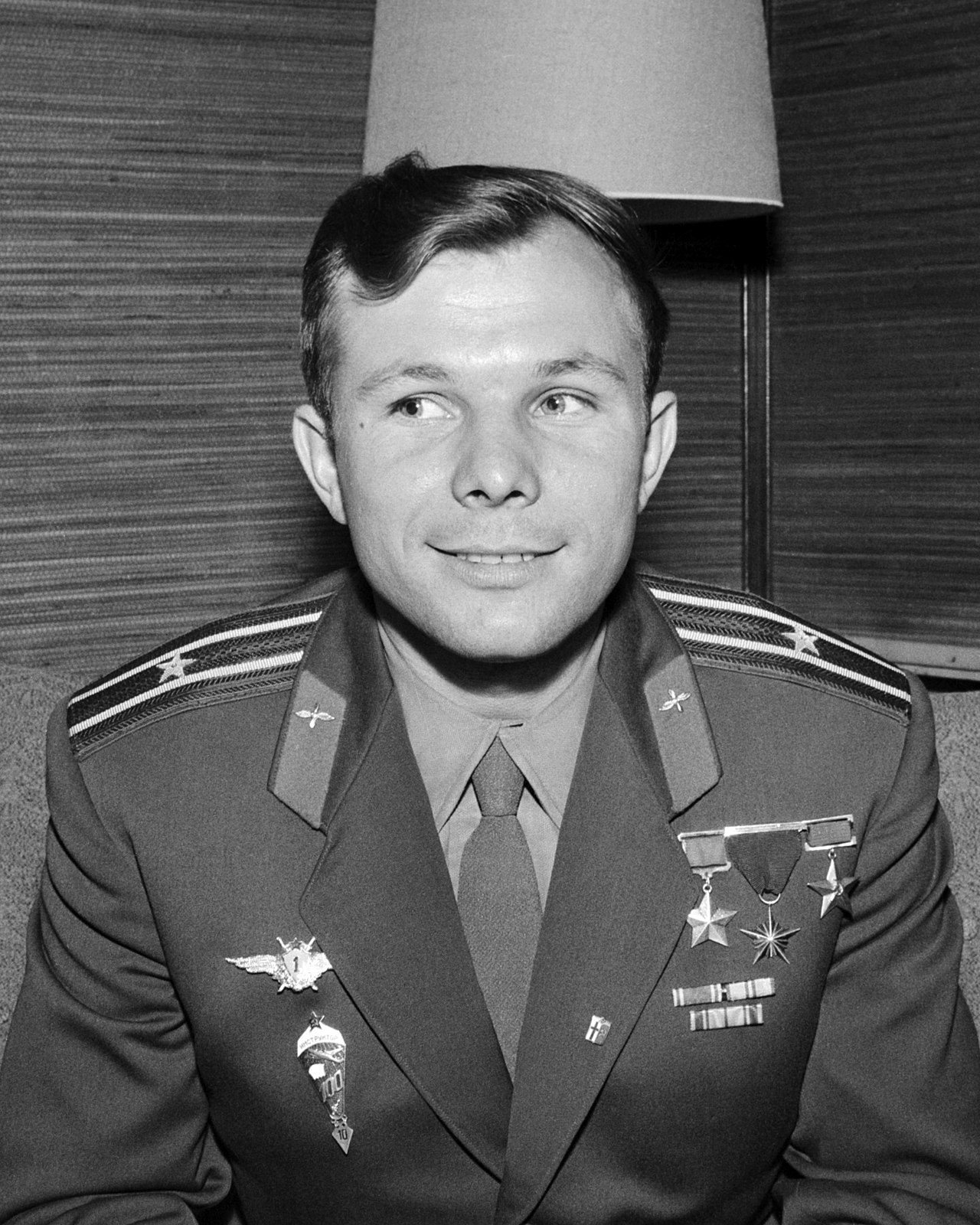
Gagarin was born on March 9, 1934, in the village of Klushino, about 160 kilometres west of Moscow. His parents worked on a collective farm. During the Nazi occupation in World War II, his family was driven from their home. Two of his sisters were taken by German soldiers to work as labourers. The family lived in a dugout his parents built behind their house.
After the war, the family moved to the town of Gzhatsk. Young Yuri attended trade school, where he trained as a foundry worker — a moulder of metal. It was practical, physical work, and it could have been his life. But at technical school in Saratov, he joined a local flying club. The first time he went up in a small aircraft, something shifted. He knew.
In 1955, he entered the Orenburg Military Pilot’s School. He graduated with honours, qualified on MiG-15 jet fighters, and was posted to Luostari airbase in the frozen north, near the Norwegian border. He was a competent, careful pilot with one distinguishing characteristic: at 157 centimetres tall, he was very, very short.
That shortness would change history. When the Soviet space programme began secretly selecting cosmonauts in 1960, the Vostok capsule’s interior diameter was just two metres. Gagarin fit perfectly.
The Communication Machine Called Vostok
This is where the story intersects with the history of connectivity — and why this moment belongs in the “Today in History of Connectivity” series.
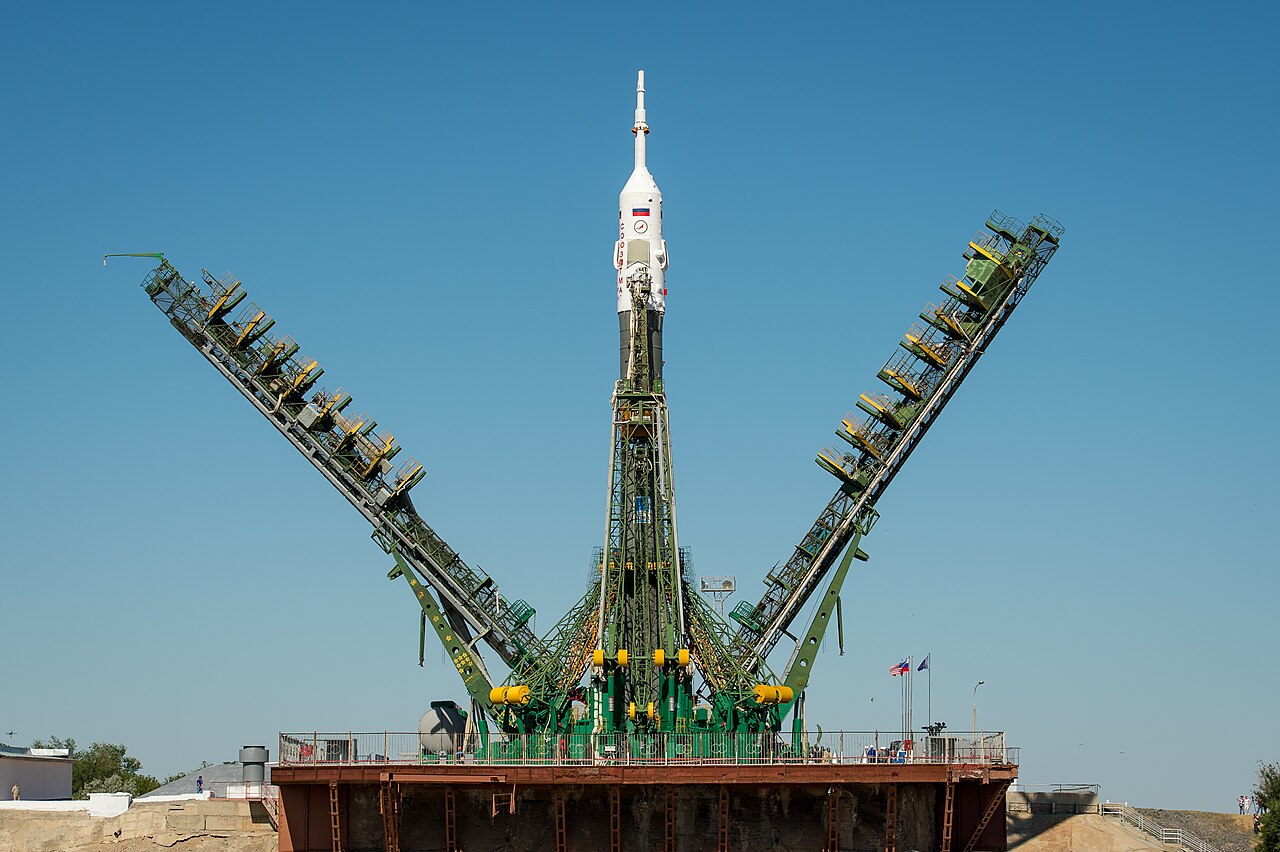
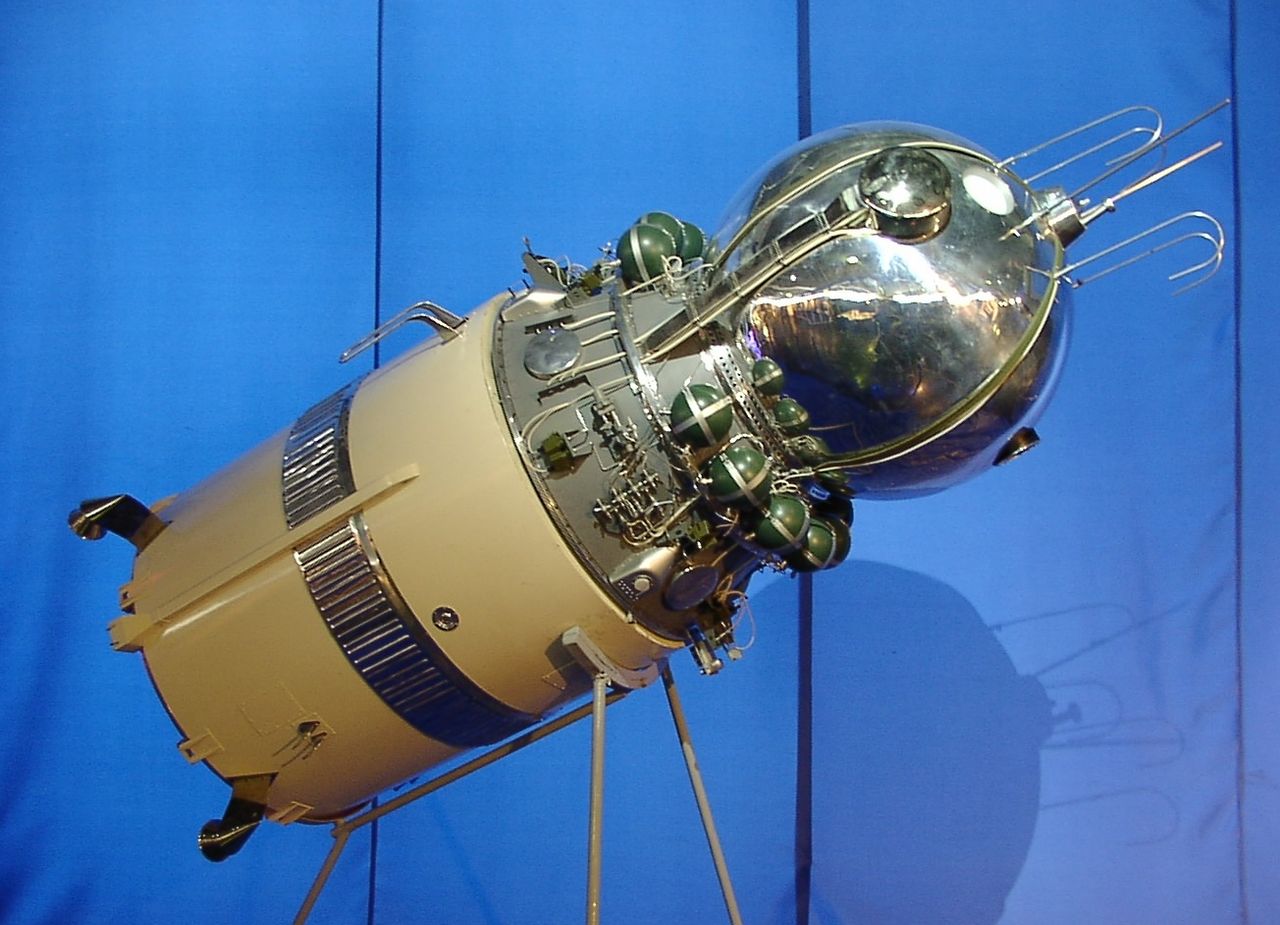
Vostok 1 was, in essence, a flying communication node. The capsule carried multiple radio systems: a primary VHF link for voice communication with ground control, a shortwave backup, and a telemetry system that continuously transmitted Gagarin’s heart rate, breathing, cabin pressure, temperature, and spacecraft orientation to tracking stations across the Soviet Union.
The manual controls were locked. The entire mission was designed to be flown by automatic systems or by ground control commands transmitted via radio. Medical staff weren’t sure how weightlessness would affect a human brain — would Gagarin panic? Lose consciousness? Hallucinate? They locked the controls and put the emergency override code (1-2-5) in a sealed envelope on board. In practice, several people told Gagarin the code before launch anyway.
At 7:10 AM, the radio communication system was switched on. An onboard camera transmitted Gagarin’s image to television screens in the launch control room — live video from inside a spacecraft, decades before FaceTime. During the two-hour wait before launch, Gagarin chatted with Chief Designer Sergei Korolev, joked with ground controllers, and sang songs — all via radio.
During the flight itself, Gagarin lost communication with ground control several times as he passed between tracking station coverage zones. These blackouts — moments when a man travelling at 27,400 km/h through the vacuum of space was completely alone, with no voice from Earth — drove the Soviet Union to invest massively in expanding their ground tracking network. That investment eventually led to the global satellite communication infrastructure we rely on today.
108 Minutes That Built a Network
The immediate aftermath of Gagarin’s flight triggered a cascade of communication technology development that reverberates to this day.
Five days after Gagarin’s flight, the US-backed invasion of Cuba at the Bay of Pigs failed. The political shock of both events pushed President Kennedy to declare, on May 25, 1961, that America would land a man on the Moon before the decade was out. That declaration — Project Apollo — required building the most sophisticated real-time communication network the world had ever seen: the Manned Space Flight Network (MSFN), a chain of ground stations spanning the globe, linked by undersea cables and satellite relays.
The technologies developed for tracking, telemetry, and communication during the space race — phased array antennas, digital telemetry protocols, satellite relay systems, deep space communication techniques — directly seeded the civilian communication infrastructure of the 1970s and 1980s. Without Apollo’s communication challenges, satellite TV, GPS, and modern wireless networks would have arrived decades later.
Gagarin himself never flew in space again. Soviet officials were terrified of losing their national hero. On March 27, 1968, during a routine training flight in a MiG-15, his aircraft crashed under still-mysterious circumstances. He was 34 years old. His ashes were placed in the Kremlin wall on Red Square.

The Voice from Orbit and the Birth of Space Communications
What actually happened in the radio link is worth understanding, because it is the direct ancestor of every satellite communications system we use today. Vostok 1 carried three separate radio systems. The first was an HF transmitter operating on 9.019 and 20.006 MHz for long-distance shortwave communication, bounced off the ionosphere to ground stations scattered across the Soviet Union. The second was a VHF transmitter on 143.625 MHz for line-of-sight contact with nearby tracking stations. The third was a UHF telemetry link, the Signal system, that continuously streamed biomedical data — Gagarin’s pulse, respiration rate, and the cabin atmosphere — back to flight controllers who had no other way to know whether their pilot was alive.
This redundant, multi-band, multi-purpose design — voice on one channel, telemetry on another, backup paths on a third — is the template that every crewed spacecraft has followed ever since. Mercury, Gemini, Apollo, Soyuz, the Space Shuttle, the International Space Station, SpaceX Dragon, Boeing Starliner — all of them carry the same architectural inheritance from that 108-minute flight. The idea that a pilot in space must never be out of contact, that vital signs must stream continuously, that commands must be uplinkable in real time, was not obvious in 1961. It had to be proven. Gagarin proved it.
The ground infrastructure was equally pioneering. The Soviet Union had built a network of tracking stations stretching from Kaliningrad on the Baltic to Petropavlovsk on the Pacific, with ship-based stations in the South Atlantic to cover the blind quarter of the orbit. This was the first global tracking network — the precursor to NASA’s Deep Space Network, the European Space Agency’s ESTRACK, and every commercial ground station business that supports today’s mega-constellations. Every time a Starlink terminal downlinks to a gateway, every time an Iridium phone finds a bird to relay through, every time a weather satellite dumps its data to a polar ground station, it is doing what Soviet engineers figured out how to do on April 12, 1961, so that one man in a spherical capsule could say “I can see clouds” and have it heard in Moscow.
Why This Day Matters to Connectivity
April 12, 1961 wasn’t just the day a man went to space. It was the day humanity proved that communication systems could work across the most hostile environment imaginable — the vacuum of space, at orbital velocity, across thousands of kilometres, in real time.
Every satellite dish on a rooftop, every GPS signal your phone receives, every weather forecast generated from orbital data, every international video call routed through a geostationary satellite — all of it traces a line back to the moment Yuri Gagarin said “Poyekhali” and radio waves carried his voice from a tiny capsule into the ears of engineers on the ground below.
At Immunity Networks, we build connectivity infrastructure that works on the ground — WiFi networks, managed cloud platforms, enterprise access points. The distances are shorter than Gagarin’s, but the principle is the same: reliable communication, in real time, without fail. That’s what April 12 is about.
Tags: #TodayInConnectivity #YuriGagarin #Vostok1 #SpaceRace #FirstHumanInSpace #SpaceCommunication #Telemetry #WiFi #ImmunityNetworks
This post is part of the Today in History of Connectivity series by Immunity Networks — marking the landmark moments that shaped how the world connects.