
April 10, 1912 — Southampton, England
Series: Today in History of Connectivity | Category: Wireless & Radio | #TodayInConnectivity
The Ship That Rewrote the Rules of Radio
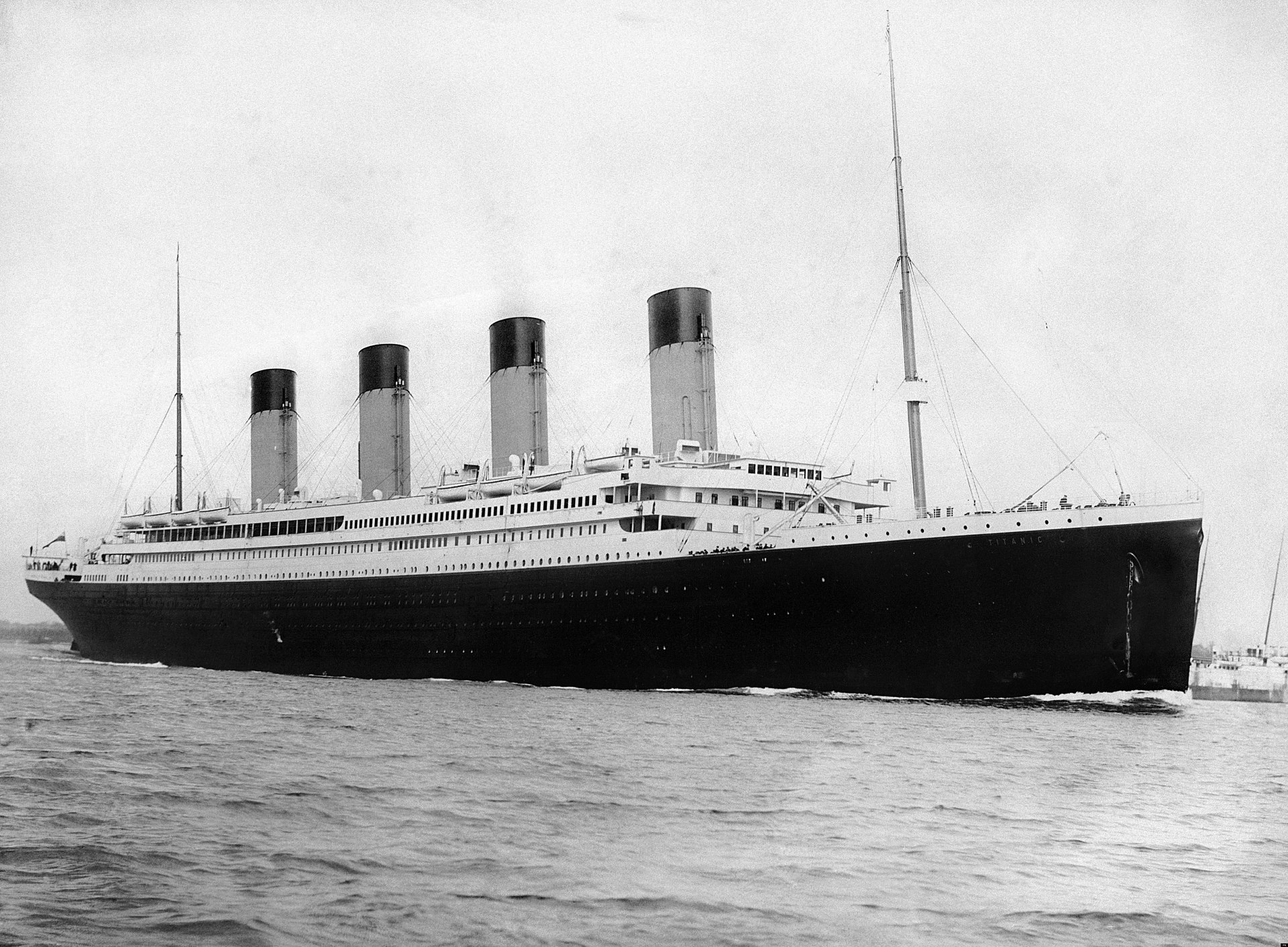
On the afternoon of April 10, 1912, a crowd of twenty thousand people gathered at the Southampton docks to watch the largest moving object ever built cast off her lines. The RMS Titanic — 269 metres long, 46,328 gross tons, nine decks high — eased into the River Test under the power of six tugs. Her four funnels towered above the rooftops of Southampton. Her first-class suites cost the equivalent of a small house. Her press releases described her as “practically unsinkable.”
Four days later, she was on the bottom of the North Atlantic. Fifteen hundred and twenty-two passengers and crew were dead. And every maritime nation on earth was about to be forced, at gunpoint of public outrage, to rewrite the rules of wireless communication at sea.
The day Titanic sailed is not just a date in maritime history. It is the day the world’s relationship with radio changed forever — and the day the seed was planted for every emergency communications system we use today, from the 999 and 112 hotlines to aviation distress frequencies to the satellite EPIRBs that let a lone sailor summon rescue from the middle of an ocean.
The Two Men in the Silent Room
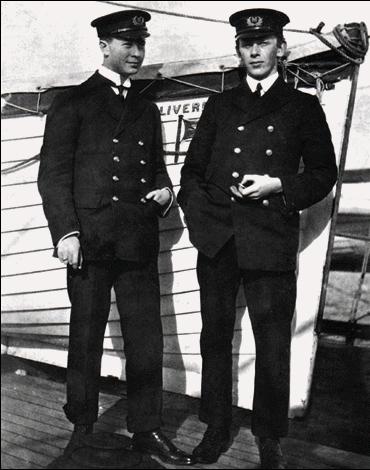
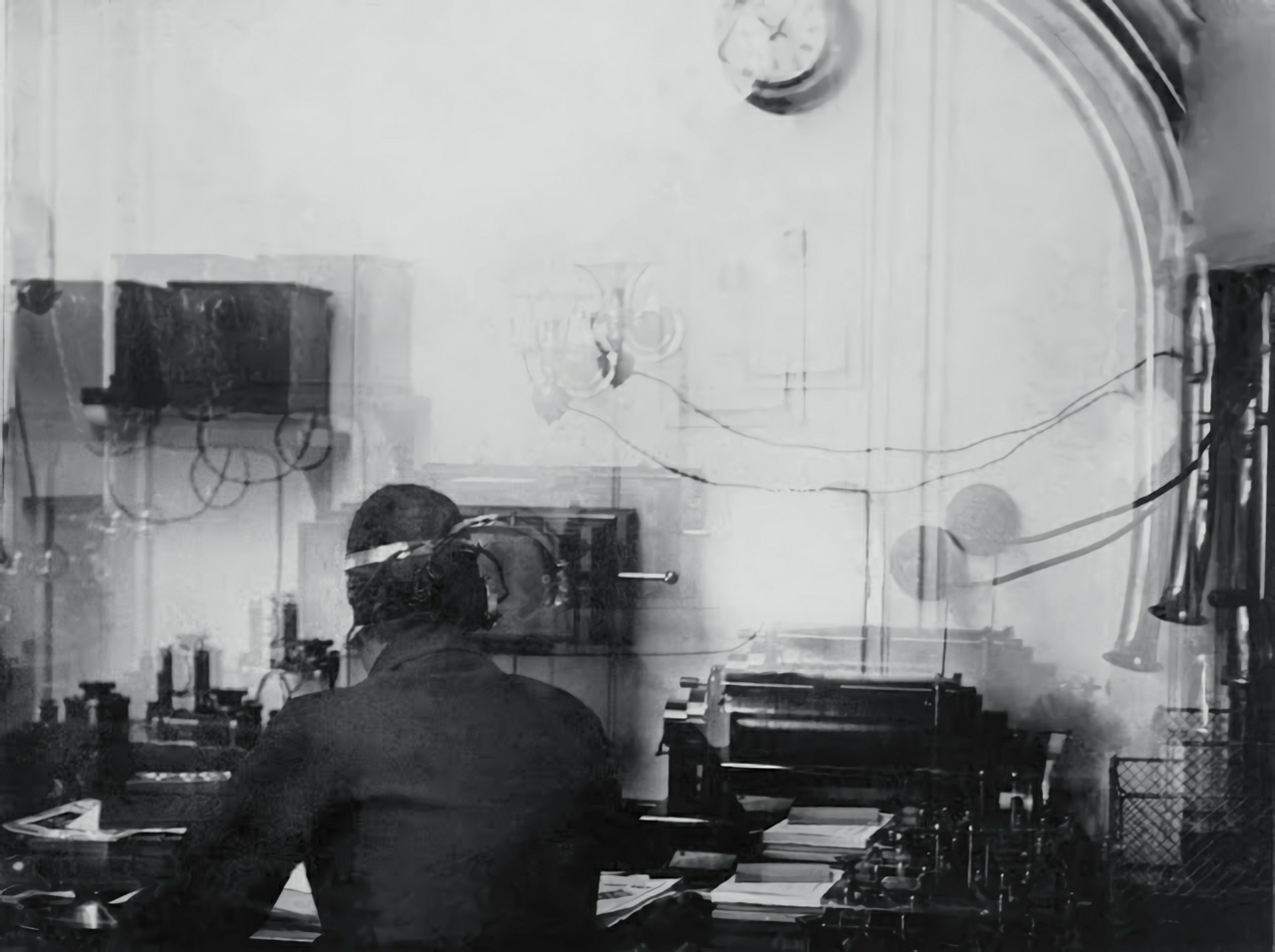
Deep inside Titanic‘s superstructure, in a tiny cabin behind the officers’ quarters on the boat deck, sat two men the travelling public never thought about: Jack Phillips, twenty-five, and Harold Bride, twenty-two. They were not White Star Line employees. They worked for the Marconi International Marine Communication Company, leased to White Star as part of the ship’s equipment package. Their job was to send and receive wireless telegrams — birthday greetings from first-class passengers to relatives in New York, stock quotes for businessmen, weather reports from passing ships, and, when necessary, distress calls.
In 1912, wireless telegraphy was barely a decade old as a commercial technology. Guglielmo Marconi had transmitted the first transatlantic signal in 1901. By 1912, most large passenger ships carried a Marconi installation, but the operators were not considered part of the ship’s crew. They answered to Marconi’s head office in London, not to the captain on the bridge. Their primary commercial function was to earn revenue by transmitting paid passenger messages. Safety traffic was secondary.
There were no international rules requiring a wireless operator to be on duty twenty-four hours a day. There were no standard distress frequencies. There was no guarantee that the ship closest to a disaster would even have its radio switched on. On the night Titanic hit the iceberg, the SS Californian was less than twenty miles away — close enough to have saved everyone. Her single wireless operator had gone to bed at 11:30 PM. His radio was silent.
CQD, SOS, and the Screams Nobody Heard
At 11:40 PM on April 14, Titanic struck the iceberg. By 12:15 AM on April 15, Captain Edward Smith was in the wireless room telling Phillips to start calling for help. Phillips began tapping out CQD — the old Marconi distress call, meaning “all stations, distress.” Later, at Bride’s suggestion, he alternated CQD with the newer international code SOS, which had been adopted at the 1906 Berlin Radiotelegraph Convention but was still rarely used.
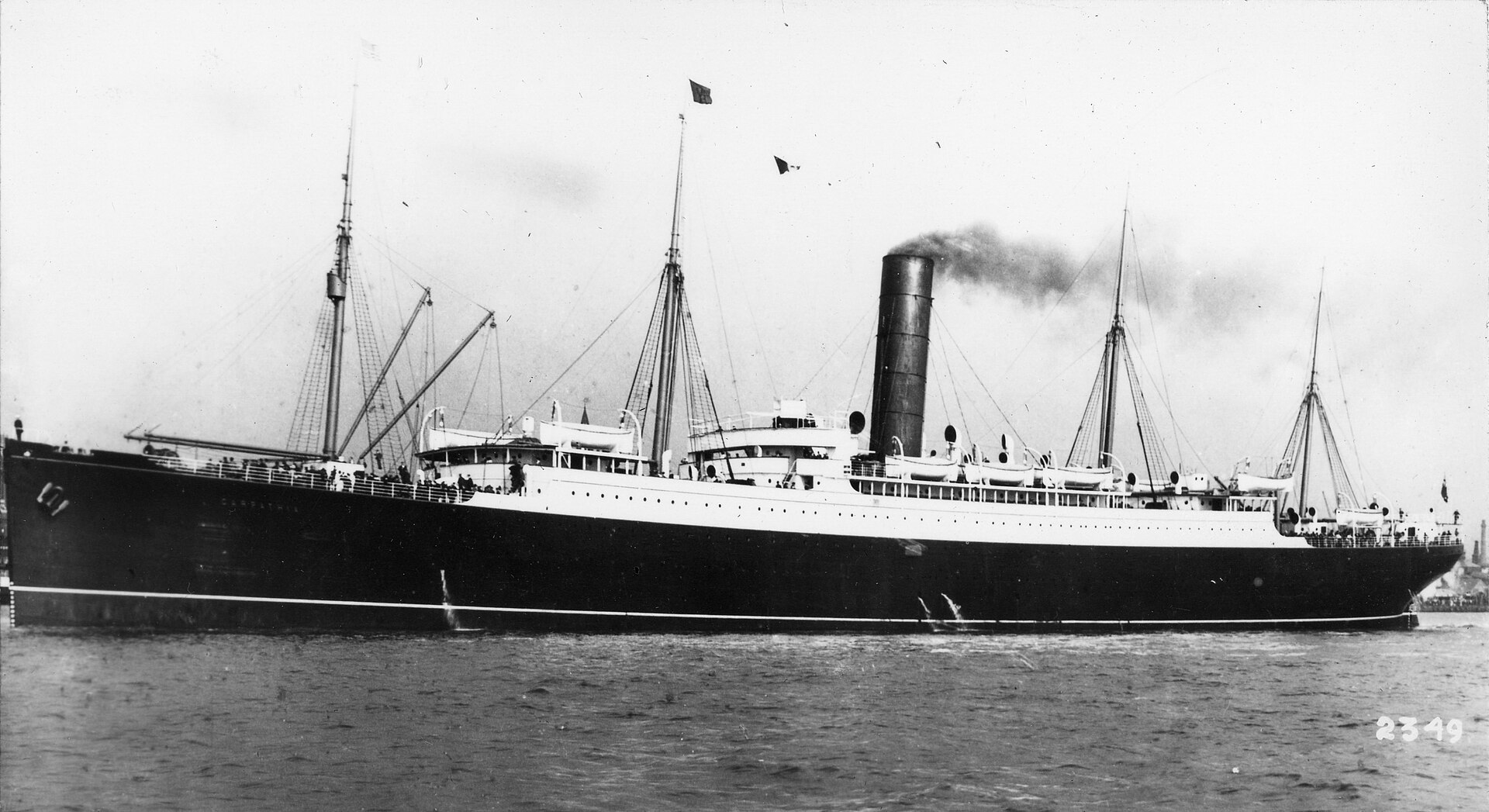
For two hours and twenty minutes, Phillips sat at his key, hammering out the ship’s position and pleading for assistance, while the ship listed further and the lights dimmed. The Cunard liner Carpathia, fifty-eight miles away, heard the call and came racing north at seventeen and a half knots, pushing her engines past their rated limits. She arrived ninety minutes after Titanic went down. She saved 705 people from the lifeboats.
The Californian, twenty miles away, heard nothing. Her operator was asleep. Her watch officers saw white rockets on the horizon and could not understand what they meant. A silent wireless room killed fifteen hundred people that night as surely as the iceberg did.
Phillips stayed at his key until the power failed. He did not survive. Bride did, pulled from the freezing water onto an overturned collapsible lifeboat, his feet permanently damaged by frostbite. Ten days later, while still convalescing, he sat at the wireless key of Carpathia and transmitted the survivor list to the world.
The Laws That the Iceberg Wrote
The public reaction to the disaster was volcanic. Newspapers on both sides of the Atlantic demanded answers. How could the world’s most modern ship sink with such loss of life? Why had a nearby ship not come to help? Why had the wireless been silent?
Within weeks, the United States Senate and the British Board of Trade were holding inquiries. The technical findings were damning: not enough lifeboats, insufficient watertight compartments, inadequate lookout procedures. But the wireless findings cut deepest into the infrastructure of the modern world. They forced the first international treaty specifically governing how radio must be used.
The Radio Act of 1912, passed by the United States Congress on August 13 — four months after Titanic sank — required every passenger ship carrying fifty or more people on ocean voyages to have a wireless installation, a qualified operator, and a continuous twenty-four-hour radio watch. Operators would now be ship’s crew, under the captain’s authority. Amateur operators, who had been crowding commercial frequencies, were pushed above 1.5 MHz — a relegation that accidentally kicked off the entire amateur radio hobby that would train generations of engineers, including Jack Kilby and Steve Wozniak.
Two years later, in 1914, thirteen nations signed the first Safety of Life at Sea (SOLAS) Convention in London. It codified everything the United States had done and extended it globally. SOLAS established that SOS would be the mandatory international distress call. It required continuous radio watch on the international distress frequency of 500 kHz. It created the legal concept that radio communication at sea was a public safety obligation, not a commercial convenience.
SOLAS is still in force today, regularly updated, binding on every ship in international waters. Every lifeboat drill, every muster station sign, every EPIRB test, every GMDSS satellite beacon traces its legal lineage directly back to April 14, 1912, and the rewriting of rules that followed.
From Spark Gap to Satellite
The technology that Phillips and Bride used that night was already a decade old in 1912. It worked — barely. The spark-gap transmitter on Titanic produced a signal so broad it interfered with nearby ships’ receivers. Coded messages were sent in Morse at perhaps twenty-five words per minute. Range on a good night was a few hundred miles. Nothing about the equipment was engineered for reliability; it was engineered for novelty.
Over the next hundred years, every upgrade to maritime and aviation communications was made under the shadow of Titanic. Continuous wave transmitters replaced spark-gap. Vacuum tubes replaced coherers. High-frequency radio made global communication possible. Medium-frequency auto-alarms were developed so that a ship’s single operator could sleep while a receiver stood watch and woke him on a distress signal. VHF brought short-range voice communications to every pleasure boat. Inmarsat satellites, launched from 1982 onwards, eventually replaced HF entirely for most blue-water shipping. The Global Maritime Distress and Safety System, fully operational by 1999, networked satellites, ground stations, and digital selective calling into an automated distress-alert infrastructure that makes a 1912-style communication failure structurally impossible.
Every one of those technologies exists because the passengers on the Californian could not hear the passengers on the Titanic.
The Human Cost of an Unwritten Protocol
It is worth pausing on what “no standard distress frequency” meant in human terms. In 1912, a ship in trouble had no guarantee that any other ship would be listening on the same channel. Wireless operators tuned their receivers by physical adjustment of coils and capacitors. If the Californian‘s operator had been at his post but listening on the wrong frequency, he would have heard nothing. If another ship within range had its equipment tuned for commercial traffic, the distress call would have gone past like a shout in an empty corridor. There was no such thing as a protocol stack, no such thing as a shared listening channel, no such thing as an obligation to respond. Every ship was an island, and every wireless operator was a freelance telegraph clerk.
The SOLAS response to this was radical. It converted radio from a commercial service into a universal safety utility. It imposed a legal obligation to listen. It defined a single frequency — 500 kHz — that every ship in the world had to monitor continuously. For the first time in the history of telecommunications, a treaty declared that one specific slice of the electromagnetic spectrum was reserved, by international law, for saving human lives. That principle — that safety traffic has absolute priority over commercial traffic — is now built into the architecture of cellular networks (911 and 112 calls bypass authentication), aviation radio (distress frequency 121.5 MHz), and even the internet (Emergency Alert System integration with ISPs). It all started in a London conference room in 1914, with delegates arguing about what had gone wrong on a ship that had sunk two years earlier.
Why It Matters to Us
At Immunity Networks, we build enterprise WiFi and wireless infrastructure, cloud management platforms, and connectivity solutions for hotels, campuses, and critical facilities. Our world is not the North Atlantic in 1912, but the engineering lesson is the same: communications networks are not luxuries. They are life-safety infrastructure. The moment you accept that, every design decision changes. You stop asking “will this work most of the time?” and start asking “will this work on the worst night of someone’s life?”
That is the lesson Jack Phillips paid for with his life, tapping CQD into a key as the deck sloped beneath him. That is the lesson the delegates at the 1914 SOLAS Convention wrote into treaty. That is the lesson every network engineer inherits whether they know it or not. Uptime is not a feature. It is the whole point.
Key Milestones
April 10, 1912: Titanic sails from Southampton on her maiden voyage.
April 14, 1912: Iceberg strike at 11:40 PM; first CQD transmitted 12:15 AM April 15.
April 15, 1912: Titanic sinks at 2:20 AM; Carpathia arrives 4:00 AM and rescues 705 survivors.
August 13, 1912: United States Radio Act signed into law, mandating 24-hour wireless watch.
January 20, 1914: First international SOLAS Convention signed in London.
1999: Global Maritime Distress and Safety System becomes fully operational, replacing Morse-code watch on 500 kHz.
Tags: #TodayInConnectivity #Titanic #Wireless #Radio #Marconi #SOLAS #MaritimeSafety #ImmunityNetworks
This post is part of the Today in History of Connectivity series by Immunity Networks — marking the milestones that built our connected world.