
Pioneers of ConnectivityElectronics · Quantum Physics
On the first day of January 1894, in a cramped house in north Calcutta, a boy was born who would one day force Albert Einstein to rewrite the rules of the universe. Not with a grand laboratory. Not with a prestigious university appointment. But with a four-page letter sent from Dhaka, written by a man Einstein had never heard of, proposing an idea so radical that it would eventually give physics an entirely new class of matter.
His name was Satyendra Nath Bose. And if you’ve ever used a laser pointer, listened to music through fibre optics, or wondered what a “boson” is — you owe something to this quiet, polyglot genius from colonial India.
A Boy Who Scored 110 Out of 100
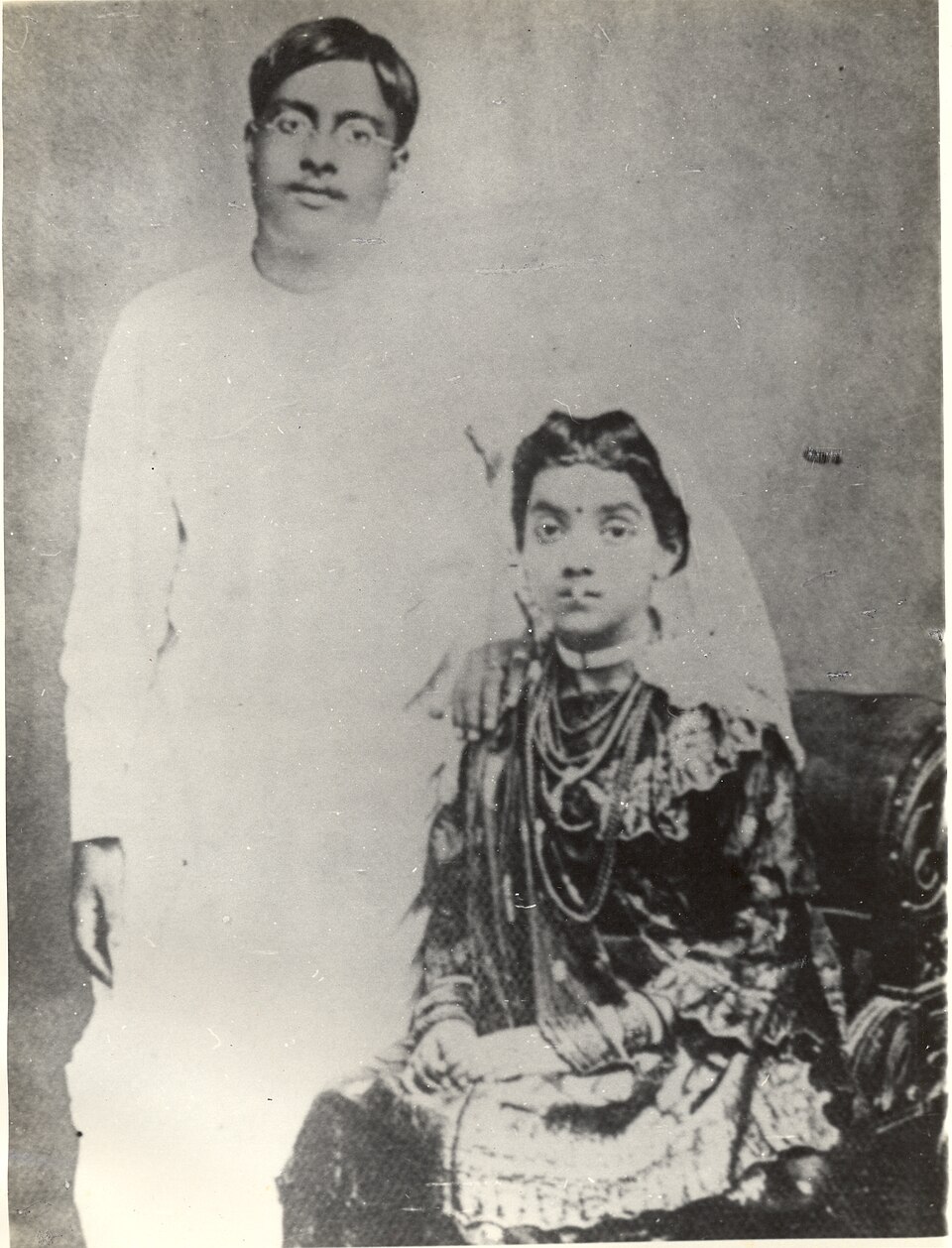
Bose grew up the eldest child — and the only son — in a family of eight. His father Surendranath worked as an accountant at the East Indian Railway before founding his own chemical company. His mother Amodini, with little formal education, raised seven children with fierce discipline.
At Hindu School in Calcutta, young Satyen’s mathematics teacher Upendranath Bakshi did something that has entered the lore of Indian science: he once gave the boy 110 marks out of 100 in a mathematics exam. His reasoning? Satyen hadn’t just solved the problems — he had solved every single alternative method as well. Bakshi reportedly boasted to anyone who would listen that this boy would one day become a great mathematician like Laplace or Cauchy.
He wasn’t wrong.
At Presidency College, Bose found himself surrounded by future legends. His classmate was Meghnad Saha, who would go on to formulate the ionisation equation that unlocked stellar astrophysics. Their teachers included Jagadish Chandra Bose — the pioneer of radio science who will appear later in our Pioneers of Connectivity series — and Prafulla Chandra Ray, the father of Indian chemistry. Bose topped every examination he sat. His B.Sc. scores set a record. His M.Sc. scores in 1915 set another — one that, according to multiple accounts, has never been surpassed at Calcutta University.
In colonial India, the most brilliant minds were barred from government administrative posts. Science and mathematics became the path forward — not by choice, but by exclusion. Bose turned that exclusion into revolution.
The Four Pages That Changed Physics
By 1924, Bose was a Reader in Physics at the University of Dhaka. He was a serious scientist but hardly a famous one. He had spent years studying the work of Max Planck and Einstein, even co-authoring with Saha the first English translations of Einstein’s relativity papers — a feat that required fluency in German, French, and a mastery of theoretical physics that few in Europe could match, let alone in colonial India.
But something bothered him. One day, while preparing a lecture, Planck’s derivation of the law governing blackbody radiation — the formula that launched quantum theory itself — struck him as fundamentally unsatisfying. The classical approach treated photons (light particles) as if they were distinguishable, like numbered billiard balls. Bose’s intuition told him they weren’t. Light particles, he believed, were fundamentally identical. Swap any two, and the universe wouldn’t notice.
He reworked the statistics from scratch. No classical fudge factors. No ad hoc assumptions. Pure quantum reasoning. The result: a clean, elegant derivation of Planck’s law — in just four pages.
He submitted the paper to Philosophical Magazine, a prominent British journal. After six months, the editors informed him the referees had given negative reports. The paper was rejected.
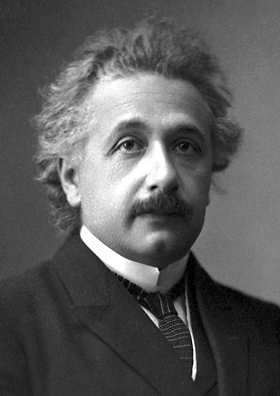
Rather than accept defeat, Bose did something audacious. He mailed the paper directly to Albert Einstein — a man he had never met, the most famous scientist alive — with a cover letter that has become one of the most celebrated in the history of science:
Respected Sir, I have ventured to send you the accompanying article for your perusal and opinion. Though a complete stranger to you, I do not feel any hesitation in making such a request. We are all your pupils though profiting only by your teachings through your writings. — Satyendra Nath Bose, letter to Albert Einstein, June 1924
Einstein read it. Then he read it again. On 2 July 1924, he responded with a handwritten postcard calling the paper “an important step forward.” He immediately recognised what no journal reviewer had: this was not merely a new derivation. It was a new way of counting particles — a new quantum statistics that would become the foundation for understanding an entire class of subatomic matter.
Einstein translated the paper into German himself and sent it to Zeitschrift für Physik — the most prestigious physics journal in the world — with his own endorsement. Then Einstein extended Bose’s method to atoms, predicting what we now call Bose-Einstein condensate — a bizarre new state of matter where particles clump into the same quantum state at ultra-low temperatures. It would take 71 years before a laboratory could achieve it, earning the 2001 Nobel Prize in Physics.
From Theory to Your WiFi Router
Here’s where this story connects to everything you use today. Bose-Einstein statistics describe the behaviour of bosons — a class of particles named after Bose by the legendary physicist Paul Dirac. Bosons include photons (light), gluons (which hold atomic nuclei together), and the famous Higgs boson — the “God Particle” discovered at CERN in 2012.
The practical technologies that flow from understanding boson behaviour are staggering:
A Life Larger Than One Discovery
In 1925, Bose travelled to Europe. He worked in Paris with Marie Curie and in Berlin with Einstein. Their conversations ranged far beyond physics — into politics, colonialism, and the future of India. In one remarkable exchange, Einstein asked Bose whether Indians truly wanted the British to leave. Bose told him that if there were a button that would make every Englishman quit India, he would press it without hesitation. Einstein fell silent, then drew the parallel to the Jewish quest for a homeland.
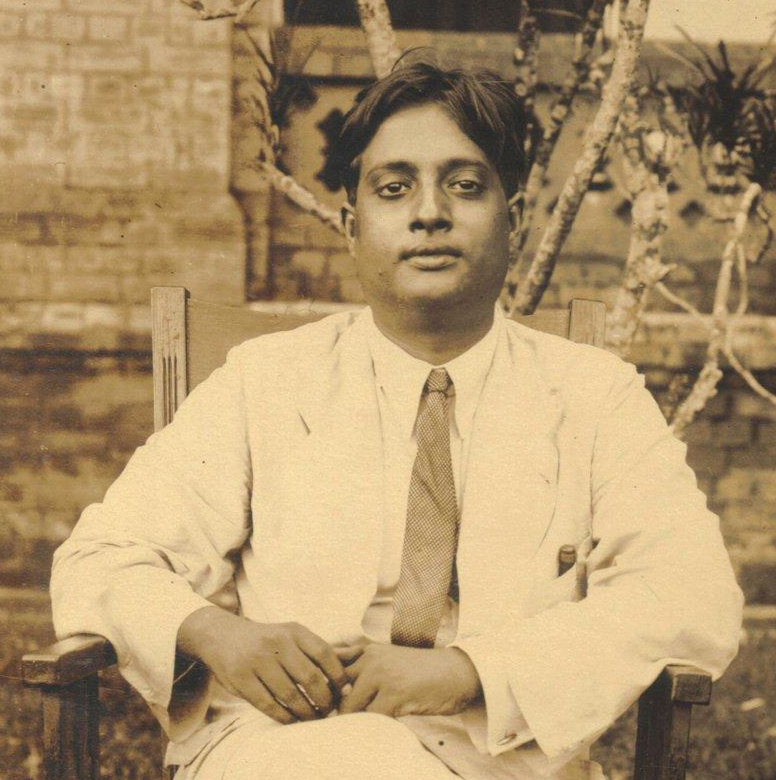
Bose returned to Dhaka — without a doctorate — yet was appointed Professor and Head of the Physics Department on Einstein’s personal recommendation. And then, something unexpected happened. Bose largely stopped publishing in physics. Not because he had nothing left to say. But because his intellect refused to be contained by one discipline.
He dove into chemistry, mineralogy, biology, soil science, philosophy, archaeology, and literature. He was a polyglot who read French and German scientific papers in the original. Most importantly, he was devoted to teaching science in Bengali, not just English, believing that a nation must think in its own language to truly innovate. Rabindranath Tagore dedicated his only science book, Visva-Parichay, to Bose — a mark of how deeply his vision of vernacular science was respected.
He ran night schools for working-class men. He advised the Council of Scientific and Industrial Research. He served as president of the Indian Physical Society, the Indian Science Congress, and the Indian Statistical Institute. He was elected Fellow of the Royal Society in 1958, and in 1959, was appointed National Professor — India’s highest scholarly honour — a position he held until his death.
The Nobel Prize That Never Came
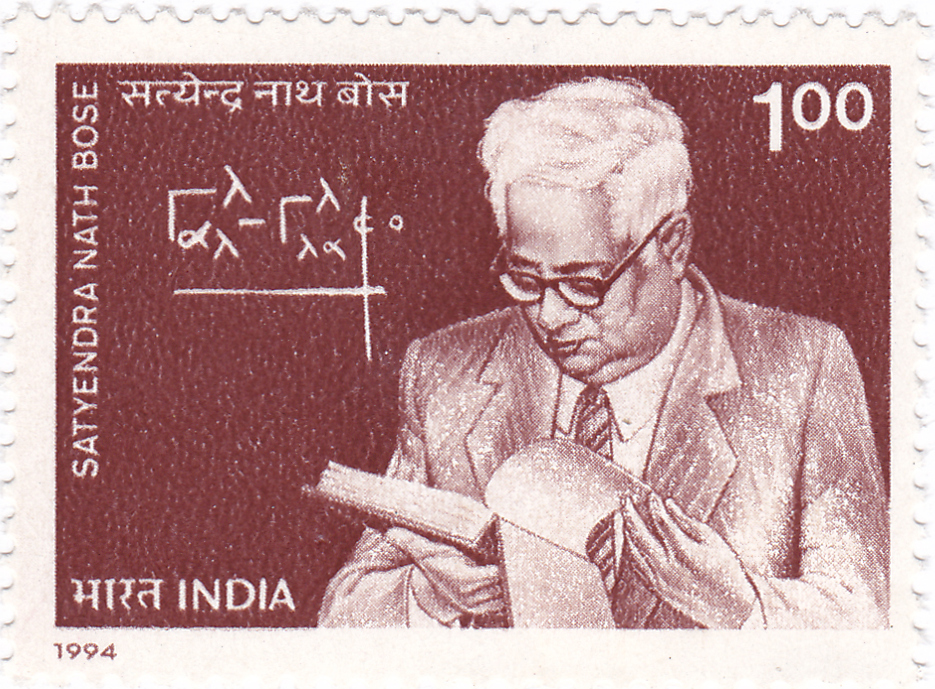
This is the part of the story that stings. Seven Nobel Prizes have been awarded for research directly built on Bose’s foundational concepts — Bose-Einstein statistics, boson theory, and Bose-Einstein condensates. The 2012 Nobel Prize for the Higgs boson discovery went to Peter Higgs and François Englert. The 2001 Nobel Prize for achieving the first Bose-Einstein condensate went to Eric Cornell, Carl Wieman, and Wolfgang Ketterle.
Bose himself? Never awarded.
Soviet Nobel laureate Lev Landau — who ranked physicists on a logarithmic scale — placed Bose in Class 1, alongside Bohr, Heisenberg, Dirac, and Schrödinger. Only Einstein ranked higher, at 0.5.
I have got all the recognition I deserve. — Satyendra Nath Bose, when asked about the Nobel Prize
Key Milestones
| 1894 | Born January 1 in Calcutta — eldest of seven children |
| 1915 | M.Sc. in Mixed Mathematics — sets record at Calcutta University that reportedly still stands |
| 1919 | Co-authors first English translations of Einstein’s relativity papers with Meghnad Saha |
| 1924 | Sends “Planck’s Law and the Hypothesis of Light Quanta” to Einstein — the paper that changed physics |
| 1925 | Works in Paris with Marie Curie and in Berlin with Einstein |
| 1926 | Paul Dirac names the particle class “bosons” in Bose’s honour |
| 1937 | Rabindranath Tagore dedicates his only science book to Bose |
| 1954 | Awarded Padma Vibhushan — India’s second-highest civilian honour |
| 1958 | Elected Fellow of the Royal Society, London |
| 1959 | Appointed National Professor — held for 15 years until his death |
| 1974 | Passes away February 4, aged 80, in Calcutta |
| 1986 | S.N. Bose National Centre for Basic Sciences established by Act of Parliament |
| 2012 | Higgs boson discovered at CERN — the “God Particle” carries his name |
What Bose Teaches Us About Indian Innovation
Satyendra Nath Bose was not operating from MIT or Cambridge. He was working in Dhaka, in a department he had built from scratch, in a country under colonial rule that actively excluded its brightest from positions of power. The journal that rejected his paper didn’t reject the physics — it rejected the provenance.
He sent it to Einstein anyway.
That act — of refusing to accept that geography determines the validity of ideas — is the founding spirit of Indian technology. It’s the same conviction that drives the engineers designing and manufacturing enterprise-grade networking equipment in India today — not assembling from imported reference designs, but engineering from the ground up.
Every radio wave is a stream of photons. Every photon is a boson. Every boson obeys the statistics that Satyendra Nath Bose derived on a chalkboard in Dhaka. When you connect to a WiFi network — whether it’s an enterprise deployment, a PM-WANI public hotspot, or a cloud-managed campus network — you are using technology whose deepest theoretical roots trace back to this man.
That’s not a metaphor. That’s physics.